The Fed’s Role in Market Movements
The Federal Reserve doesn’t just influence interest rates it sets the tone for the entire financial system. At its core, the Fed uses its benchmark interest rate, the federal funds rate, to manage inflation and keep the economy balanced. When inflation climbs too high, the Fed may raise rates to cool things down. When the economy starts to stall, it may cut rates to encourage borrowing and investment.
Rate hikes generally signal that the Fed wants to slow things down. They make borrowing more expensive for consumers and businesses, which reduces spending and helps tame inflation. On the flip side, rate cuts are like putting the wind back in the sails they’re designed to make credit cheaper, spark investment, and support growth.
These moves don’t happen in isolation. They set off fast moving ripples across the financial system especially in the stock market. Investors respond quickly, often within minutes of a Fed announcement. Because interest rates affect everything from corporate debt costs to consumer behavior, rate changes become a chain reaction with real consequences.
Why Investors React Fast
The stock market isn’t forward thinking it’s forward pricing. Every share you buy is more a bet on tomorrow than today. Prices factor in projected earnings, expected growth, and the overall risk of holding that stock. Change any of those inputs, and the price moves.
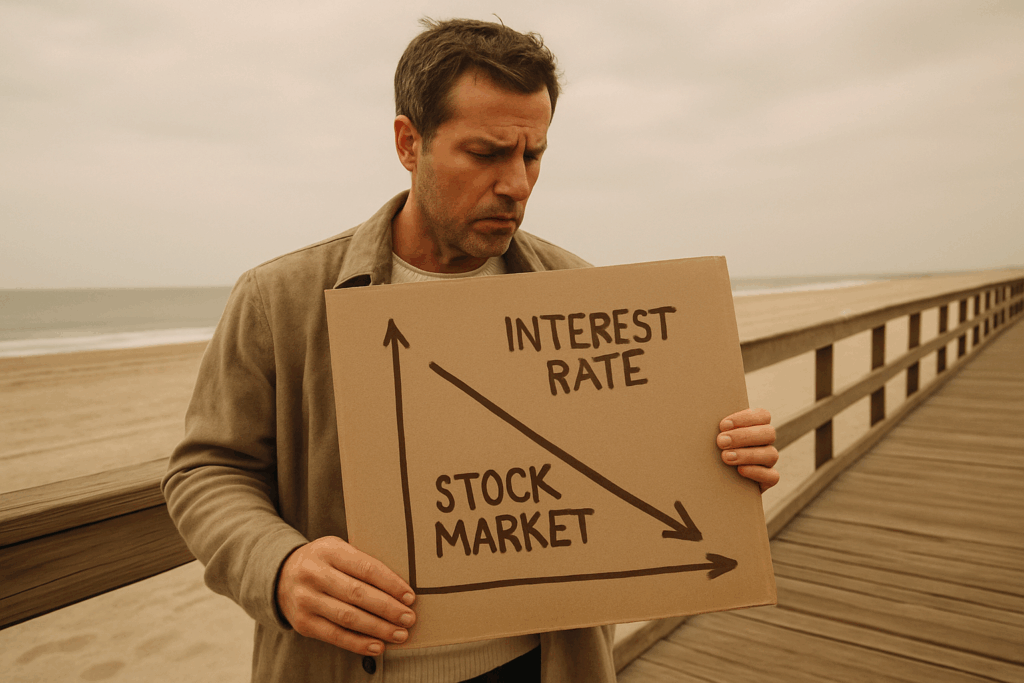
This is where interest rates come in. When the Federal Reserve hikes rates, it makes borrowing more expensive. That slows business expansion, raises debt costs, and can compress profit margins. Investors start recalibrating their models. Growth stocks, in particular, take a hit because their promise lies in long term gains and higher rates shrink the value of future cash flows.
On the flip side, lower interest rates drop those costs and can light a fire under spending, hiring, and capital investment. That’s usually bullish for stocks, especially those tied to consumer demand or growth sectors.
But here’s the kicker: It’s not always rational. Markets often move on what they think the Fed is signaling about the broader economy. A rate hike might signal confidence in growth or fear of inflation. A cut might mean relief or panic. Psychology plays a massive role in the first few hours or days after a Fed move.
(Dig deeper into this with market volatility explained)
Winners and Losers

Interest rate changes don’t affect all stocks equally. Some sectors thrive, others struggle and for investors, knowing which is which can help manage risk and spot opportunity.
Growth Stocks: Feeling the Pressure
Growth companies, especially in the tech sector, often rely on future earnings to justify their high valuations. When interest rates rise:
Future cash flows get discounted more steeply, lowering present value
Access to cheap capital shrinks, limiting expansion
High valuation multiples become harder to sustain
As a result, these stocks tend to take a hit when borrowing costs go up.
Value Stocks: Relative Resilience
Value stocks like banks, energy companies, or industrial firms tend to perform better during rate hikes, especially when those hikes signal confidence in the economy.
Banks may benefit from higher interest margins
Industrial firms see steady demand if the economy remains strong
Dividends and solid earnings provide downside support
These companies are more reliant on current earnings, making them less reactive to rate changes than speculative growth names.
Real Estate and Utilities: Rate Sensitive Sectors
Sectors with high capital requirements, such as real estate and utilities, often struggle in a rising rate environment.
Higher interest rates increase borrowing costs for development and operations
Income focused investors may shift to safer fixed income assets as yields improve
These sectors often carry high debt loads, making rate hikes particularly painful
Currency Effects: The Dollar’s Influence
Federal rate decisions also ripple beyond equity sectors, particularly through exchange rates.
Higher U.S. rates tend to strengthen the dollar, attracting foreign investment
A stronger dollar can hurt multinational companies by reducing overseas revenue when converted back to USD
Export heavy industries may face headwinds from reduced global competitiveness
Understanding these dynamics can help investors balance their portfolios and make more strategic decisions in response to Fed signals.
Volatility Is Part of the Game
Markets hate surprises, but they love to move and sometimes, those moves make no sense in the short run. Interest rate changes from the Fed can send stocks soaring or tanking, depending on how investors interpret the signals. One announcement can create a sharp rally in the morning and a steep drop by the afternoon.
This isn’t chaos. It’s just how the market expresses uncertainty. Veteran investors don’t try to dodge the volatility they brace for it. They build positions knowing that whiplash is part of the deal. That’s how you stay in the game long enough to benefit when the dust clears.
Bottom line: you can’t predict every swing, but you can prepare for the ride.
For more, check out this market volatility explained guide.
Takeaway
Interest rates aren’t just economic jargon they’re one of the most powerful tools in the Fed’s kit. When rates go up or down, nearly every asset class reacts. Stocks, bonds, currencies they all shift, usually fast. That’s because rates influence the cost of borrowing, the value of money, and investors’ appetite for risk.
So when the Fed makes a move or even hints at making one markets don’t wait to act. They swing. Sometimes a lot. The trick isn’t to predict the exact moment or amount of a move. It’s understanding the pattern: rate hikes tend to slow things down, rate cuts usually heat them up. Simple but not always obvious in the moment.
If you want to stay one step ahead, don’t just watch the headlines. Watch the reactions. See where money flows and where it drains. Because when it comes to interest rates, everything is connected and the chain reaction happens fast.